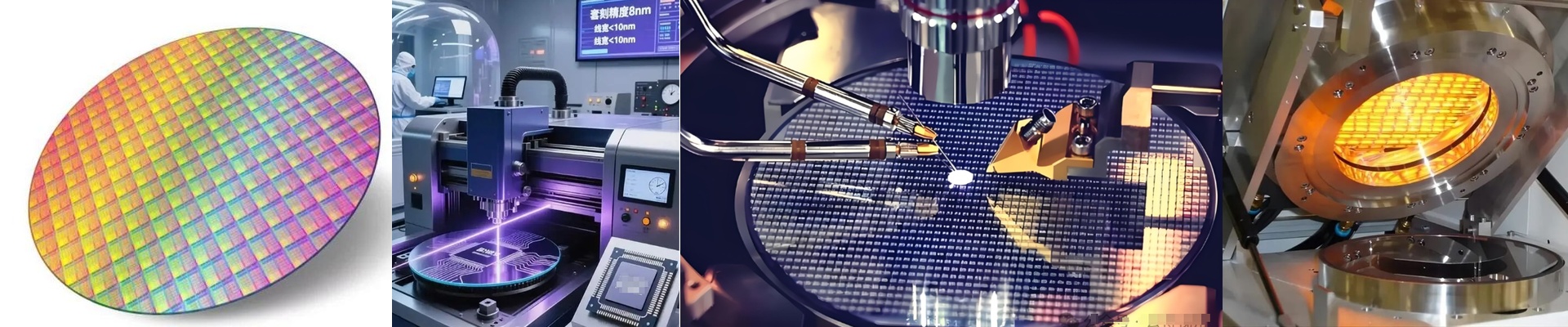
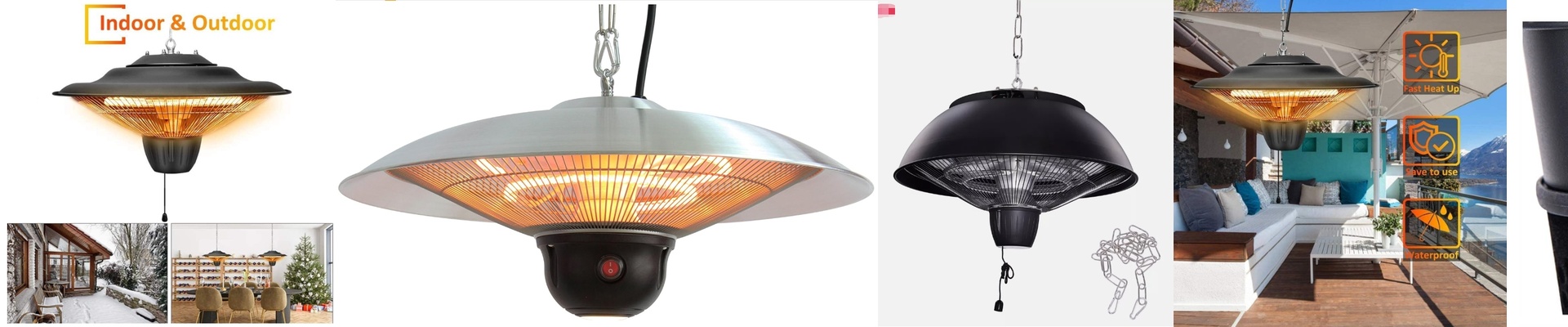
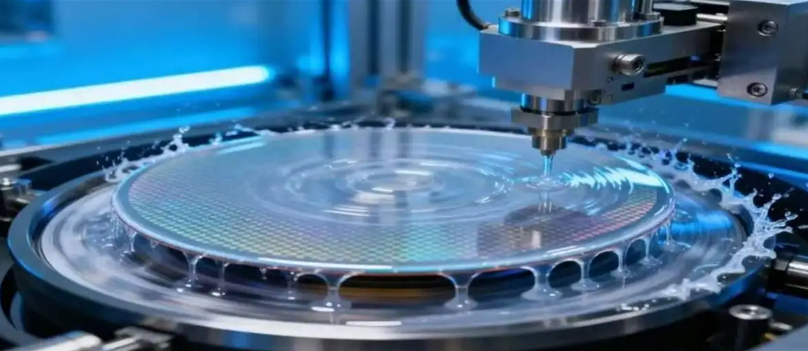
On the floor, the line is humming. Lithography cells are cycling wafers through soft bake and hard bake, and the temperature setpoints are locked in. A few degrees of drift across the wafer, a cold spot near the edge, or a heater tripping under load can quietly kill yield. You’re not just paying for scrapped wafers. You’re paying in lost capacity, emergency maintenance windows, and photoresist profiles that drift off the design rules. This is where medium wave infrared heaters earn their keep. They deliver the repeatable, uniform thermal energy semiconductor tools need—without the variability that shows up as line-width error, poor adhesion, or solvent carryover.
What actually matters on the tool
Medium wave infrared heating isn’t a random pick. It couples efficiently into the photoresist and substrate without blowing the thermal budget. The wavelength range hits the absorption profile you want, so bake cycles are faster and more stable, with less thermal lag and tighter control.
- Wafer-level uniformity: You’re looking at ±0.1°C across the wafer surface at the bake station. That’s not a slide-deck promise—it’s what the control loop holds, steady-state and during load transients. That kind of uniformity is what keeps critical dimensions consistent from center to edge.
- Photoresist bake precision: Soft bake and hard bake temperatures stay inside tight tolerances, so solvent removal and crosslinking are repeatable. The payoff is predictable film thickness and adhesion, which matters when you hit the next patterning and etch steps.
- Zero particle generation: The heater design is cleanroom-compatible for Class 1–100 environments. Surface temps and materials are chosen to minimize outgassing and prevent flaking. In practice, particle counts in the process chamber stay within spec, so delicate surfaces stay protected.
- 24/7 reliability: The system is built for continuous operation with zero unplanned downtime. Field data backs it up—long runtimes without heater-related failures, solid thermal cycling performance, and maintenance intervals you can plan around.
- Cleanroom-ready construction: Housings, seals, and mounting interfaces meet semiconductor equipment expectations. The footprint integrates into existing platforms without making service access a headache.
- Energy efficiency: Medium wave infrared heats directly, so you’re not dumping energy into surrounding fixtures. That translates into lower energy draw per wafer—an easy win when you’re running hundreds of thousands of wafers a year.
Why this works in semiconductor manufacturing
Thermal control isn’t a background function—it’s baked into the recipe. Photoresist processing demands repeatable bake profiles. Wafer cleaning and drying rely on stable, uniform heat to manage surface tension and drying rates. Even subtle thermal gradients can push non-uniformity into coating, exposure, and development, and those defects stack up across layers. We design these heaters to drop into existing process tools with minimal rework. They meet the thermal performance lithography bake stations require, where soft bake and hard bake profiles have to be consistent wafer-to-wafer and lot-to-lot. The control response is fast enough to handle batch changes without overshoot, and the uniformity keeps the whole wafer inside the thermal window advanced nodes demand. The gains are measurable.
- Better process repeatability: Tighter temperature control reduces photoresist profile variation, which supports tighter CD control and fewer excursions.
- Lower energy cost: Direct infrared coupling and efficient power management cut energy use compared with convection-heavy approaches.
- Fewer replacements: The heater construction and thermal design extend service life, so you spend less on spares and less labor on maintenance.
- Less unplanned downtime: Reliability keeps the line moving. That’s the point—thermal stability you don’t have to babysit. We engineer these heaters to align with international semiconductor equipment standards, delivering performance that’s functionally equivalent to established thermal modules. For fabs and integrators, that means an alternative that plugs in, runs, and qualifies without re-engineering the entire thermal stack.
The details that make the difference
Installation is straightforward, but the details matter. The heater integrates into the bake chamber with specific clearances and mounting torque values. Make sure the tool’s power and control interfaces match the heater’s connector type and signaling. The control loop performs best when thermocouple placement aligns with the heater’s sensing strategy—otherwise you won’t get the closed-loop response that keeps that ±0.1°C uniformity. One real-world constraint: cleanroom ambient conditions can affect radiative heat transfer and cooling. If your facility runs at very low humidity or extreme temperature setpoints, talk through the operating envelope with your integration team. In most cases, the system can be tuned to compensate, but extreme environments narrow the tuning window. Plan for routine verification. Even highly reliable heaters benefit from periodic calibration checks against a traceable standard. It keeps the process in control over years of operation and makes audits cleaner. If your line depends on precise wafer heating—photoresist soft bake and hard bake, controlled drying, or thermally sensitive cleaning—medium wave infrared heaters give you the thermal control that keeps the process in spec. We build them to run, and we design them to integrate. The result is thermal performance that meets modern semiconductor manufacturing demands, with reliability that holds up on a 24/7 floor.