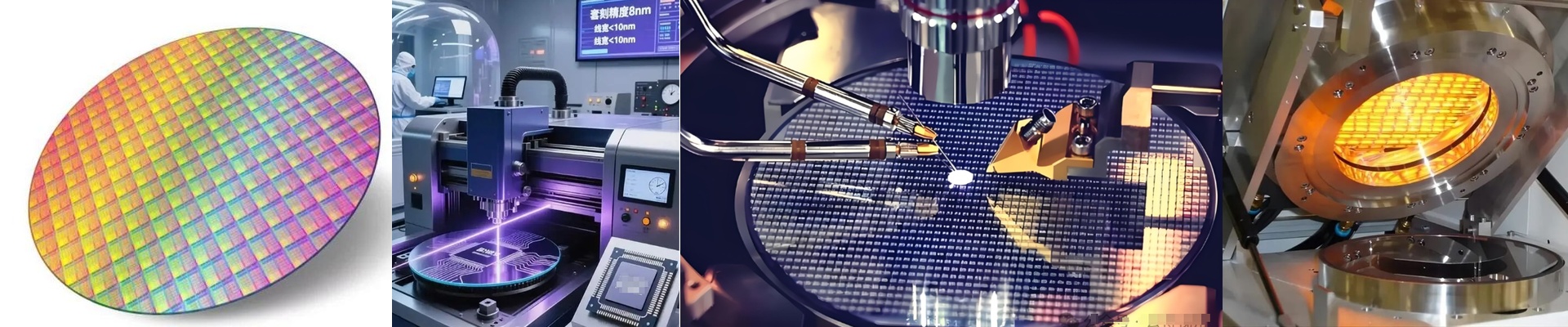
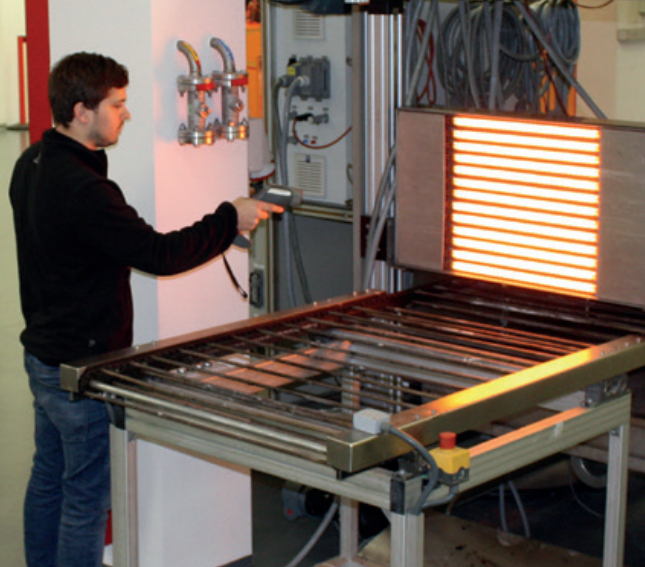
Watch a Micro LED wafer come off the final rinse and sit there, waiting to dry. On the line, you know how quickly things can go sideways. If the heater drifts by even a few tenths, you’ll see edge bead hang on, photoresist patterns soften, and yield slip before lithography even gets started. We built the Micro LED wafer drying heater to take that variability out of the equation. What matters under the hood The unit runs short-wave infrared elements behind quartz windows, so you get fast, line-of-sight heating and a quick cooldown. Across the chuck, wafer-level temperature uniformity holds at ±0.1°C. That’s what lets edge beads break clean and keeps critical photoresist bake profiles repeatable, run after run. It’s built for cleanroom Class 1–100: low-outgassing materials and an airflow path that doesn’t stir particles. We’re not chasing a slogan—we’re chasing zero particle generation. The heater drops straight into track tools and stand-alone drying cells, with standard voltage options and a footprint that leaves room for robotics and metrology. Why it fits Micro LED production In Micro LED, the thermal budget is tight and there’s no margin for contamination. This dryer keeps bake temperature stable through soft bake and hard bake, so you don’t get CD and overlay drift driven by thermal non-uniformity. When the bake is repeatable, qualification cycles shorten and scrap drops. Energy use comes down because the system heats only the target area and cycles fast between loads. Reliability is built for 24/7 operation—components chosen for long life and predictable maintenance intervals—so unplanned downtime stays off the board. A few field-level notes You’ll get the best performance when the exhaust path matches the tool’s ducting. Mismatched backpressure will show up as longer settling times and can hurt particle performance. Installation means matching the chuck size and connector interface to your specific track or dryer platform. There’s a short commissioning period to dial in the recipe for your solvent mix and wafer size. Once that’s aligned, the process window opens up and the line runs with fewer interruptions.