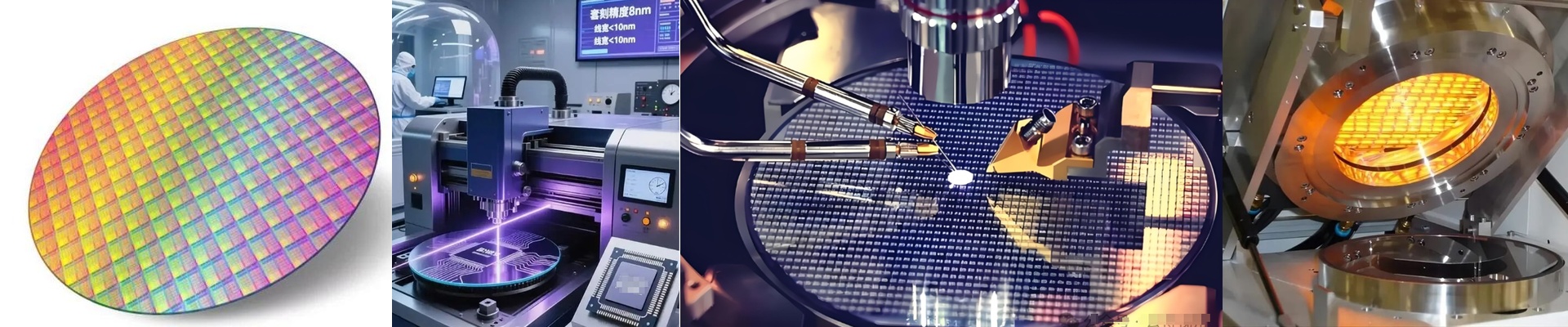
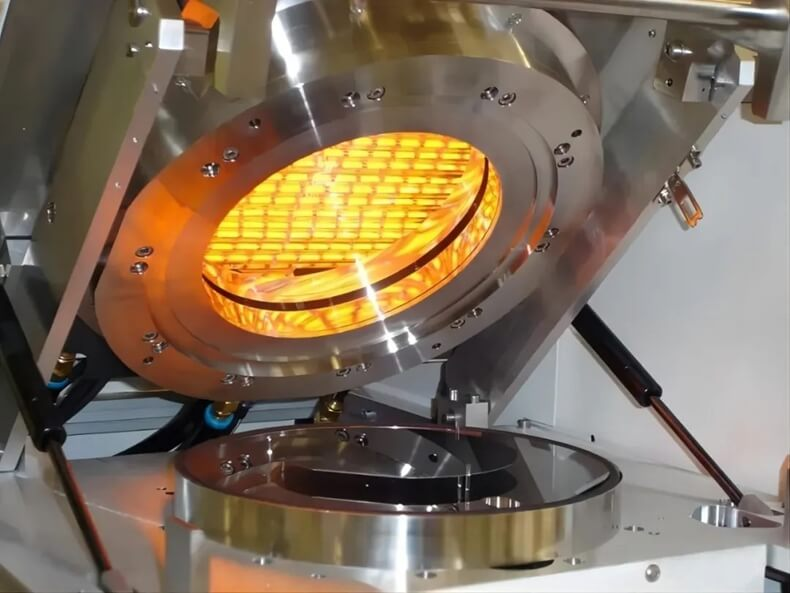
On the fab floor, a 0.2°C drift in photoresist bake temperature will eat away at CD uniformity and yield before you even see it on the charts. We built our semiconductor laser diode heater to stop that drift where it starts, because in this business thermal control isn’t a support system—it is the process.
Infrared Precision: Sub-Millimeter Uniformity, Repeatable
We pair near-infrared (NIR) emission with low-thermal-mass wafer heating, so the thermal field stays tight—sub-millimeter—and edge-to-center deltas shrink. Across the active zone, you get wafer-level uniformity within ±0.1°C, and repeatability that holds up shift-to-shift, lot-to-lot. The response is fast and predictable, which means soft bake and hard bake profiles stay locked to spec without overshoot. No chasing the curve.
Why It Works in Lithography and Photoresist Bake
In lithography, photoresist behavior is set by temperature history, not just the setpoint on the display. Our laser diode heater keeps that history stable, which cuts linewidth variation and protects the layers that matter most. It runs in Class 1–100 cleanrooms with zero particle generation and a sealed optical path, so contamination doesn’t get a foothold in the thermal budget. The upshot: dependable 24/7 uptime, lower energy draw, and fewer consumable swaps—without giving up bake quality.
Installation and Compatibility: Plan for the Real Line
The unit is built to drop into existing wafer track and bake modules, but it still needs precise alignment and cleanroom-compatible mounting. Thermal performance hinges on setting emissivity correctly and keeping the ambient temperature under control. Expect a short commissioning run to lock the recipe and confirm uniformity mapping. Once you’re calibrated, the process stays repeatable—no constant tinkering required.