
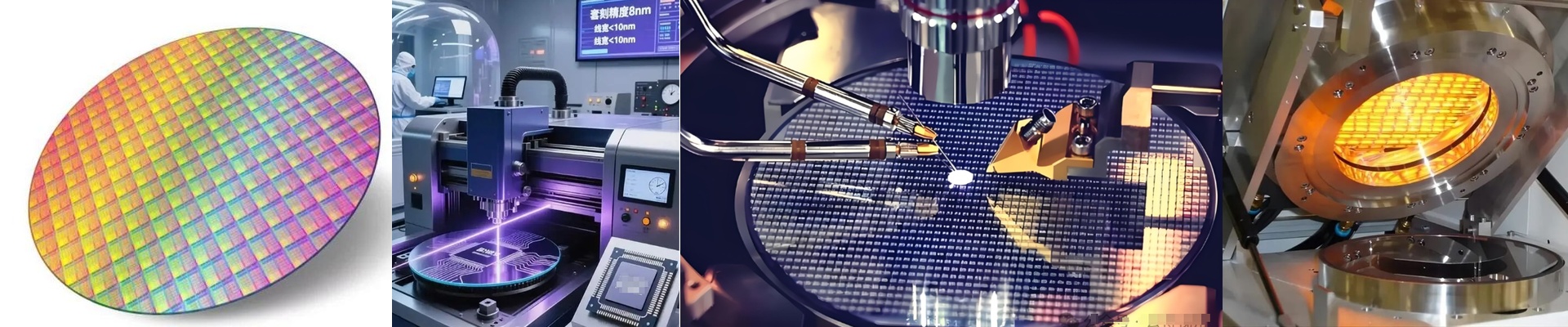
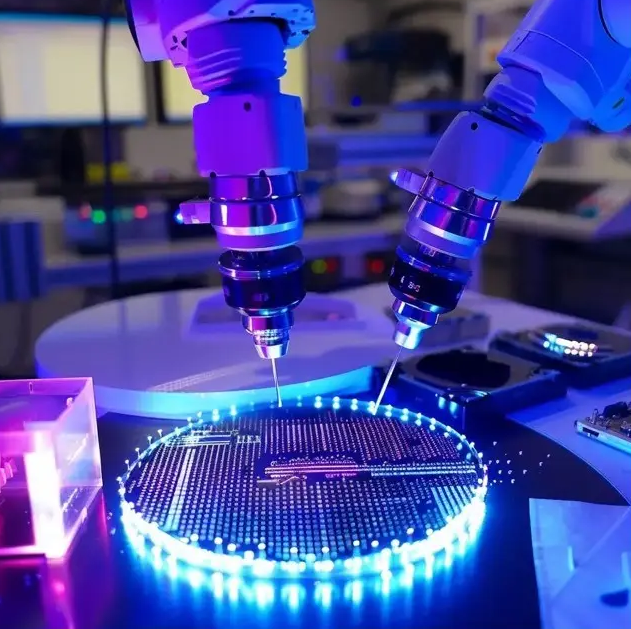
On the lithography floor, a 0.5°C drift during the photoresist bake is enough to shift critical dimensions by nanometers and wipe out a whole lot. We build heaters for exactly that reality. As a semiconductor heater supplier, we design thermal systems that hold wafer temperature steady through soft bake, hard bake, and post-bake—without breaking a Class 1–100 cleanroom. What matters under the hood We target wafer-level thermal uniformity of ±0.1°C, measured right at the process surface, not somewhere inside the heater body. Fast-response short-wave or medium-wave elements keep the thermal budget tight, while quartz and high-purity ceramic assemblies hold outgassing and particle generation flat—no growth. Clean-compatible mounting and shielded wiring help keep cleanroom particle counts in spec. The control loop is tuned for repeatability, so every bake lands the same as the last, batch after batch. In high-volume fabs, photoresist bake repeatability cuts rework and excursions tied to line-width variation. Tighter uniformity means fewer edge defects and a more predictable yield. Stable, repeatable temperature control also shortens qualification cycles and trims energy use by killing overshoot and idle stabilization. These heaters run 24/7 with low maintenance, so you don’t get unplanned downtime in the middle of a continuous flow. A few practical notes These units are engineered for specific chamber footprints and voltage classes. Drop one into a mechanical envelope it wasn’t designed for, and you’ll lose uniformity—and risk messing up the interface cleanliness. Order with exact dimensions, connector type, and voltage nailed down, then plan a quick thermal mapping step after install to lock in the recipe.