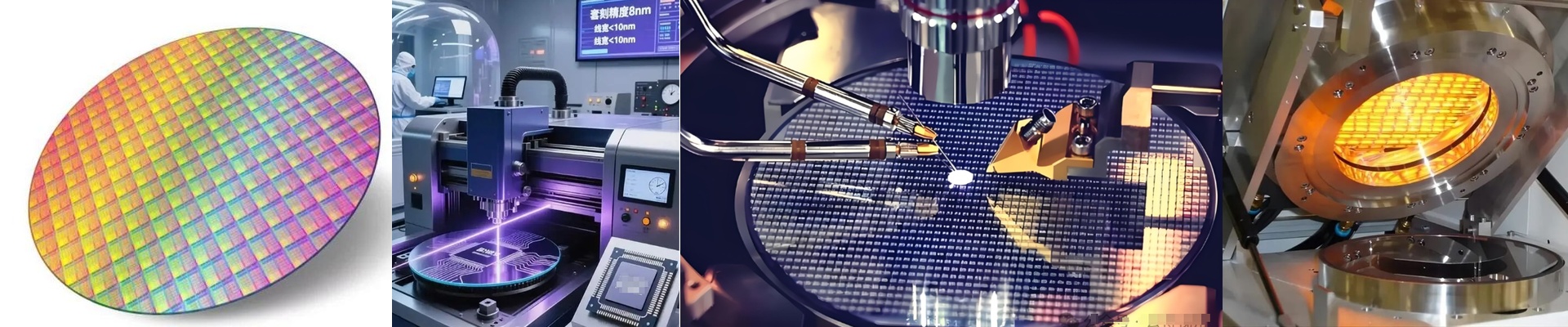
Getting Your Thermal Data Right for Next-Gen Semiconductor Heaters
If you’re building a smart fab, you’ve probably realized that basic temperature monitoring just doesn’t cut it anymore. You need a system that actually talks to your PLC in real-time, giving you the kind of granular data that lets you close the loop and stop guessing. In the world of semiconductor heating, a tiny slip-up leads to warped wafers or uneven dopant diffusion. It’s a nightmare you want to avoid.
The nitty-gritty of sensing
It all starts with the alloy. Depending on your heat window, you’re looking at Type K or Type S thermocouples. Type S is the workhorse for diffusion furnaces because it doesn’t drift when things get blistering hot. But here’s the thing: the best sensor in the world is useless if it’s in the wrong spot. If your probe placement is off, you get “cold spots.” One bad spot, and your whole batch of wafers is scrap. We focus on cutting down thermal lag because fast response times keep your PID controller from overshooting. Nobody wants to burn out their heating elements because the sensor was too slow to react.
Moving the data
Industry 4.0 sounds fancy, but it’s really just about the signal. We’re moving away from those old analog dials and switching to digitized streams. By pairing thermocouples with high-res A/D converters, you get a digital fingerprint of every single thermal cycle. This is where it gets useful. You can actually see a heating lamp starting to degrade before it completely dies. You spot the drift in your software, schedule a swap during your next planned break, and keep the line moving.
The trade-offs (because there’s always a catch)
Precision isn’t free. The more thermocouples you cram in for better mapping, the messier your wiring gets. Plus, you’re inviting noise into the signal. You’ll need shielded cabling to keep the EMI from the power supply from messing with your readings. But be careful. If you go overboard with the shielding, you might actually slow down the sensor’s response time. It’s a balancing act. You have to weigh your shielding specs against the sampling rate your control system actually needs to stay stable.