Stopping the Nightmare: How We Keep Your Fab Safe from IR Lamp Failures
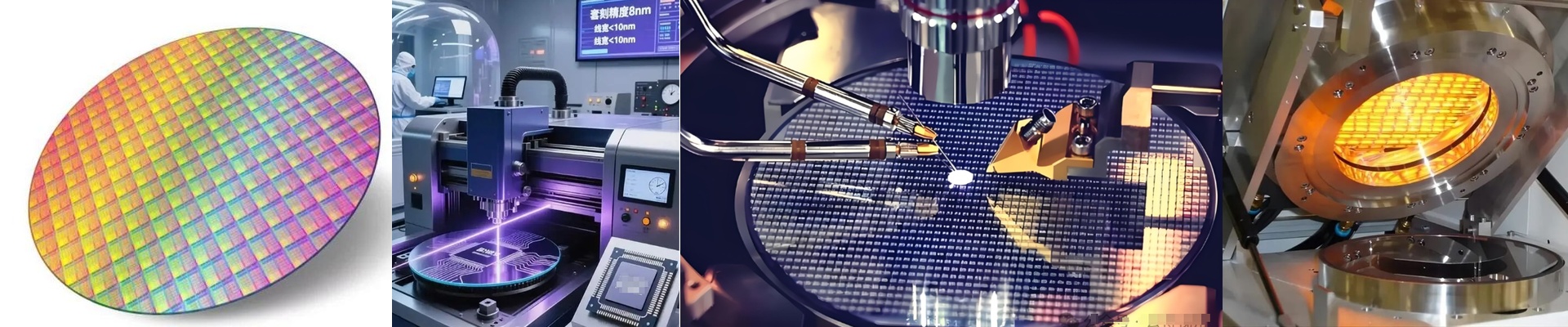
Let’s be honest. A burst infrared lamp in a semiconductor fab is a total disaster. You aren’t just looking at a dead heating element. You’re looking at shards of quartz and chemical gunk raining down on your wafers. When you’re pushing high-load production, the thermal stress and electrical spikes make these failures a real possibility. That’s why we build our lamps to handle the worst-case scenario. Keeping the Mess Inside We start with high-purity synthetic quartz for the envelope. It takes the hit of rapid heating and cooling way better than standard glass. But we don’t stop there. We add a shatter-resistant coating or a protective sleeve. Think of it as an insurance policy. If the filament gives out and the tube cracks, that coating holds the fragments together. It keeps the debris from drifting into your wafer chamber and ruining your day. Dealing with the Heat When you pack high wattage into a small space, things get hot. Fast. To stop “hot spots” from forming, we spec our filaments to keep the temperature gradient steady. But you’ve got to do your part, too. Make sure your cooling manifolds are lined up perfectly. If your airflow gets blocked, the quartz overheats, and that protective layer we talked about starts to degrade. The Boring (But Important) Electrical Stuff We use reinforced end-cap seals because a tiny gas leak is a death sentence for a filament. Once oxygen gets in, the lamp burns out almost instantly. And a quick tip on the wiring: use matched impedance controllers. In a fab environment, voltage spikes are the number one killer of lamps. At the end of the day, we design for the “fail-safe.” We’d rather lose a tiny bit of IR transmission to the protective coating than risk a total fab shutdown because one tube decided to pop. It’s a small trade-off for a lot of peace of mind.